Reaching Power Without Losing the Soul

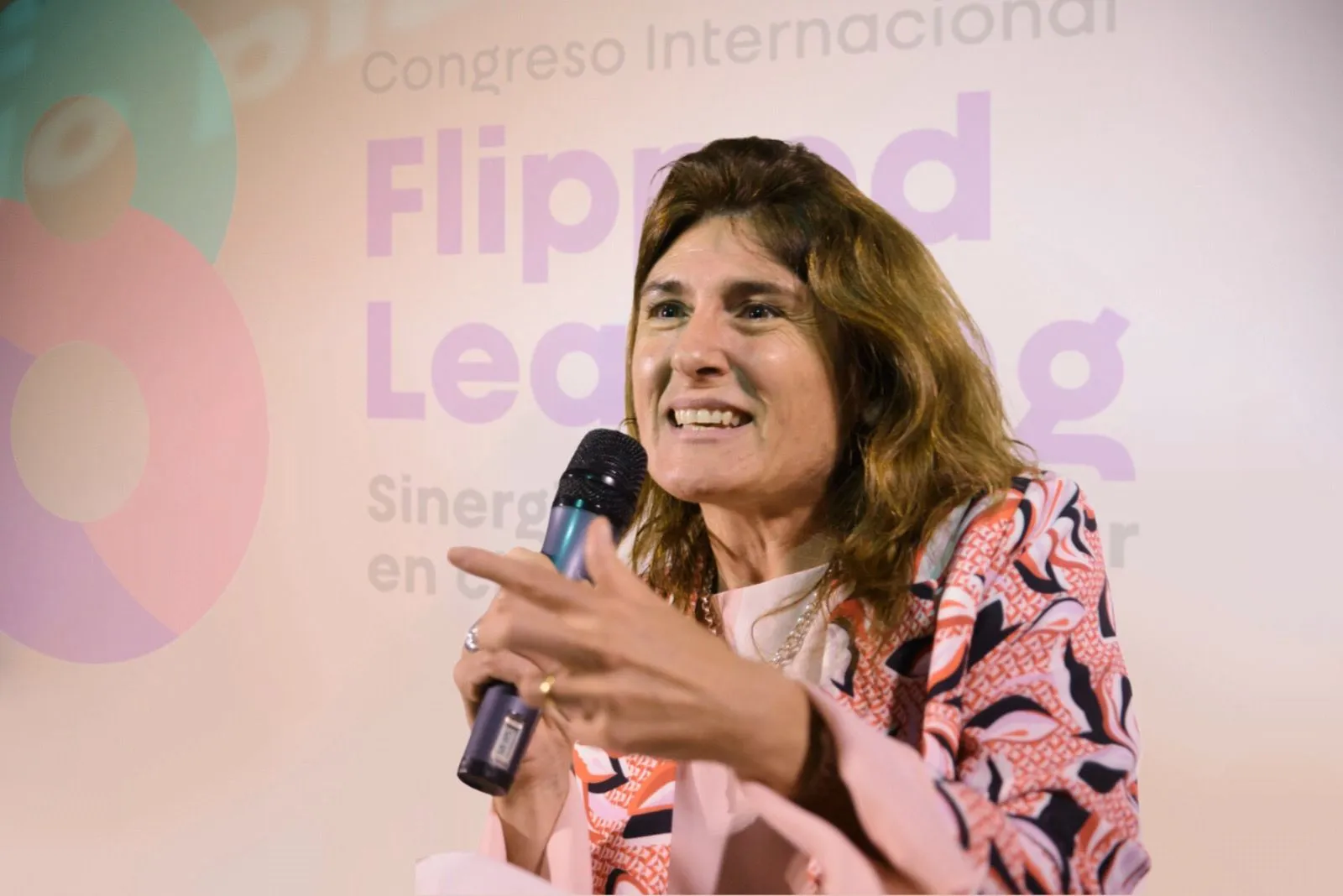
The new frontier of women's leadership
For decades, women have fought for access to the spaces where decisions are made. We have demanded equal opportunity, autonomy, recognition, and representation. That fight remains essential. But perhaps the time has come to ask ourselves a more uncomfortable question: what is the point of reaching power if, in order to stay there, we have to become the very thing we once set out to change?
The final frontier of equality and freedom does not consist only in women occupying the same places and positions as men. It consists in being able to inhabit and transform them without renouncing our identity, without hardening our hearts in order to be respected, and without having to leave our soul at the door.
For centuries, women's success was measured against standards built around competition, control, constant productivity, and the obligation to always appear strong and available. Many women have been required — and still are — to prove themselves twice as much, to be allowed half as many mistakes, and to show no exhaustion, doubt, or fragility. We are expected to be firm, but not too firm; sensitive, but not emotional; ambitious, but not threatening. And the list of demands could go on, running through the corporate, political, social, cultural, community, family, and personal spheres.
Women are invited to lead, but often within structures that continue to penalize anything that doesn't fit the traditional model of power. At times, we are required to deny our own sensitivity and inner life in order to demonstrate strength, as though exercising leadership meant distancing ourselves from what makes us profoundly human. We are even pushed toward developing a kind of silent phobia of our own soul. I call this soul-phobia (almafobia): the fear of encountering our own interiority, our spiritual dimension, and whatever connects us to meaning, conscience, and transcendence. And, paradoxically, these are precisely the dimensions that today's power structures need most — structures so often deafened, accelerated, and dehumanized by power itself.
Women's leadership grows stronger when we stop hiding that depth and dare to express it instead. We don't need to conceal what sustains us inwardly in order to be recognized; on the contrary, making it visible can become one of our greatest sources of authority, coherence, and strength. Because leading with soul does not make us weaker. It makes us freer, more conscious, and above all, more human.
Soul-phobia also shows up when we confuse leadership with omnipotence; when we believe caring diminishes our professionalism; when we distrust our intuition because it cannot always be translated into data, metrics, or spreadsheets; or when we fear stopping, because in that silence we might discover that the success we've achieved doesn't necessarily match the life we actually want. It can also live within organizations themselves — celebrating diversity while continuing to recognize and reward only one way of exercising authority.
That is why it remains essential for more women to reach spaces of decision-making. But it is not enough. The real challenge is also transforming the way we understand and exercise power itself.
A woman can reach the top and, nevertheless, reproduce the same logics of exclusion, indifference, or dehumanization she encountered on her way in — meaning the model of power itself remains untouched.
The true revolution, then, will not happen when women prove we can wield power the same way men do. It will happen when we dare to redefine what having power actually means.
Women's leadership today holds a historic opportunity: to help transform power understood as domination into power conceived as service, responsibility, the capacity to build bonds, to safeguard dignity, and to build a shared future.
This does not mean idealizing women or claiming moral superiority. There is no single feminine way to lead.
But there is a historical experience we should not waste. For centuries, many women sustained communities without recognition, built networks, protected life amid scarcity, and learned to perceive what the center of power often failed to see. That experience can become, today, a deep source of political, business, and social innovation.
But truly transforming power takes more than acquiring new technical skills. We need something greater: a deeper intelligence, capable of awakening questions about the meaning of what we do, helping us recognize our non-negotiable values, and sustaining coherence even when no one is watching.
That is spiritual intelligence: the kind that invites us to ask what sort of person we are becoming as we pursue our goals; whether our leadership generates fear or trust; what the human cost of our success is; and whether we use power to protect our position, or to expand the possibilities and potential of others.
A spiritually intelligent woman is not a docile woman, nor one who avoids conflict. She can be firm, make difficult decisions, set limits, contest space, and exercise authority. But she does not need to dehumanize herself to do it.
Our strength does not come from pretending nothing affects us, but from knowing what sustains us. Nor will our authority depend solely on the position we hold, but on the coherence between what we proclaim, the decisions we make, and how we treat people.
The expansion of artificial intelligence makes this debate even more urgent. In a world where algorithms process data and automate decisions, human leadership will be defined less and less by how much we know, and more and more by our capacity for discernment.
And for women, there is an added risk: that emancipation becomes just another form of exhaustion. We are not fully free if we win the right to occupy every space, yet feel guilty when we cannot hold up all of them at once.
Perhaps the next gender gap won't be only economic, political, or digital. Perhaps it will also be spiritual: the distance between the life we display and the life we actually want to live.
That is why the women's leadership of the future doesn't need only strong women. It needs inwardly sovereign women: capable of exercising authority without humiliating, of caring without disappearing, of growing without losing themselves, and of holding onto their convictions even when their surroundings invite them to abandon them.
Today, more than ever, we need to remember that power does not belong to us: it is entrusted to us. And that all authority finds its deepest meaning when it becomes service.
From a humanist and Christian perspective, this conviction is essential: no person is an instrument. Every person holds a dignity that precedes their productivity, their position, their success, and their usefulness.
To lead, then, is not only to decide — it is to care, to discern, to serve, to open paths so that others, too, can grow and develop.
And perhaps that is where the greatest opportunity of this generation of women leaders lies: not simply occupying places once denied to us, but transforming those places so that whoever comes after finds structures that are more human, more just, and more open to the dignity of every person.
Dear women, breaking the glass ceiling was necessary, but it will not be enough. The real challenge begins now: not only reaching the places of power, but transforming them.
Because after breaking through the glass ceiling, we carry the responsibility not to reproduce the world we found, but to dare to build a better one. A more human, more dignified world — and, above all, one with soul in action, unfolding our inner sovereignty.
By Adriana Sirito, author of Almafobia: la inteligencia espiritual en tiempos de inteligencia artificial (Soul-Phobia: Spiritual Intelligence in the Age of Artificial Intelligence).