Out of Twenty Regions, Only Three Have Approved Assisted Suicide Legislation—Most Recently Emilia-Romagna: The Prudence of Regional Councils in Safeguarding the Right to Care Above the Right to Die
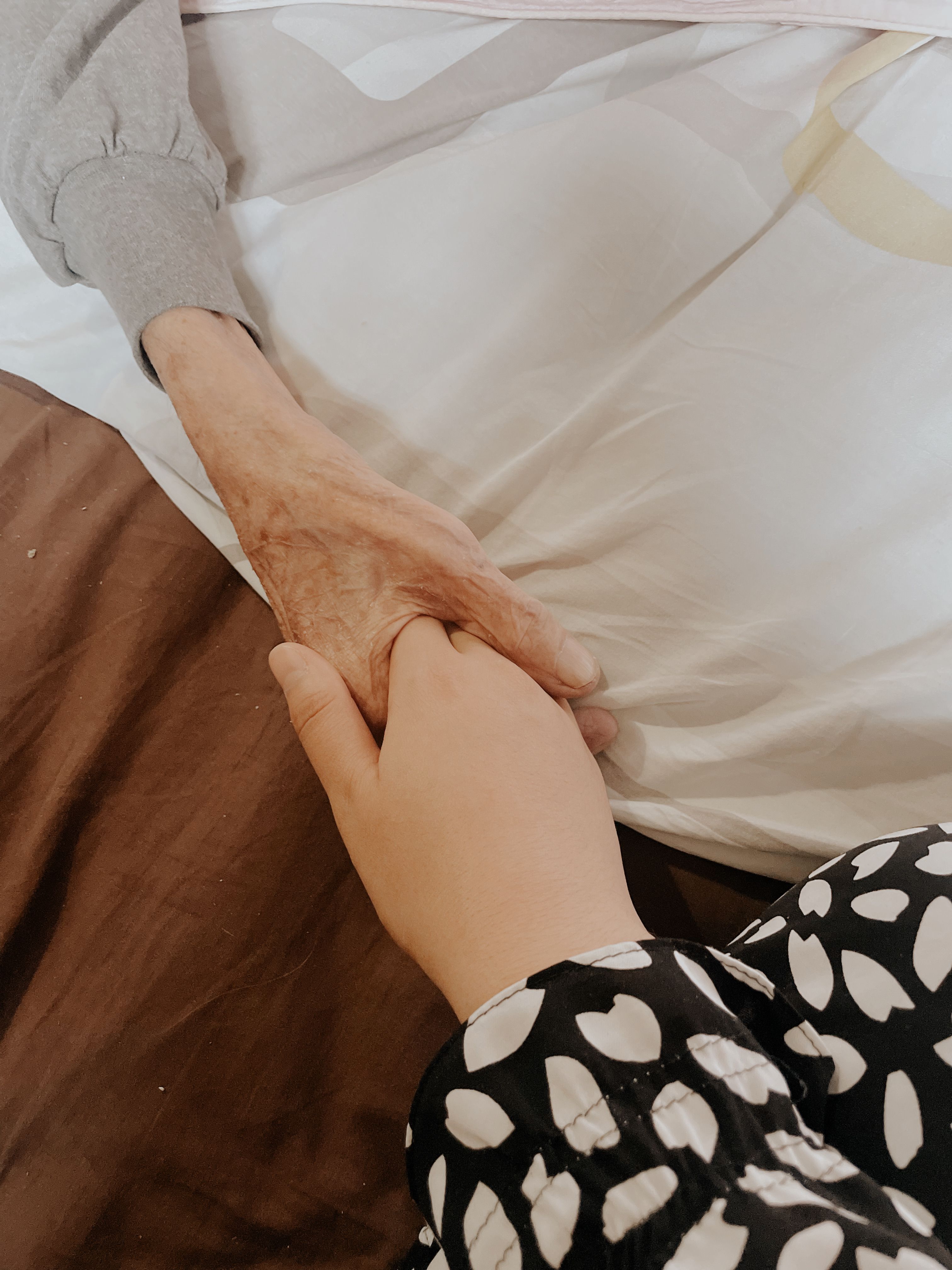

Over the course of eighteen months, between March 2025 and July 2026, three Italian regions enacted legislation on end-of-life matters, all based on the same framework, one that closely mirrors the proposal put forward by the Luca Coscioni Association. This proposal has long been intrinsically open not only to medically assisted suicide but also to euthanasia itself. This orientation is confirmed by the successive amendments proposed to the original draft, which progressively broaden the scope of the legislation by relaxing certain requirements—such as dependence on life-sustaining treatment—and by modifying the methods of administering the lethal medication to explicitly include administration by a third party. The sustained pressure exerted on regional governments, including those that have already expressly rejected such legislation, remains constant and capitalizes on every newsworthy case to encourage public opinion to claim as a “right” what the Constitutional Court’s original ruling had defined solely as a decriminalization. This is the strategy of incremental change, gradually influencing other regions by portraying them as culpable for not yet legislating on the matter, while introducing, under the guise of minimal regulatory adjustments, measures that steadily expand the practical application of the law. Ostensibly, these interventions concern only procedural rules and timelines governing how regional health services are to implement what is commonly referred to as the “Cappato-saving” Constitutional Court ruling.
In reality, as has repeatedly been pointed out by professionals engaged in patient care—particularly those working in the field of palliative medicine—as well as by numerous associations, most of them inspired by Catholic principles, the measures introduced by these three regional laws, all of which stem from the same cultural framework, fundamentally overturn the mission of the National Health Service. Its essential purpose is to provide care, preceded by prevention and, whenever possible, rehabilitation aimed at restoring the patient's quality of life. None of these laws seeks to prevent requests for euthanasia; on the contrary, they serve only to reinforce them. None strengthens the therapeutic relationship, whether in the management of pain or in the provision of health and social care, nor do they contain any meaningful commitment to rehabilitation capable of restoring the patient's dignity, beginning with the desire to live. Instead, they presume that the patient has already reached a firm, unequivocal, and irreversible decision to reject life, leaving the physician with the sole function of bringing that life to an end. No room is left for the physician–patient relationship to foster a change of perspective or to explore alternative courses of action. Indeed, any attempt to do so is portrayed as manipulative, as though no longer wishing to die were itself a sign of unmistakable weakness. This is the great paradox: strength is attributed to the person who wishes to die, while weakness is assigned to the one who continues to live despite everything. Likewise, the regions that have enacted these laws—despite merely reproducing the Coscioni proposal without introducing anything original—are portrayed as progressive champions of the “right to die.” By contrast, other regions, including Lazio and Lombardy, which rank among the highest in the country in both the quality and availability of palliative care, are depicted as resistant to recognizing a right to die precisely because they remain committed to defending the right to life. In this narrative, the National Health Service is considered truly responsive only if it offers patients the means to die, whereas it is portrayed as cold and lacking compassion when it instead devotes itself to palliative care as the new frontier of medicine.
The current debate appears to be focused primarily on the relationship between regional and national legislative powers. In its recent Judgment No. 148 of 24 July 2026, however, the Constitutional Court reaffirmed that “regional legislation, in relation to the delicate balancing of interests concerning medically assisted suicide, cannot presume to act as a substitute for national legislation by, so to speak, appropriating the fundamental legal principles identified by this Court and crystallizing them in its own provisions.” Likewise, considerable discussion has centered on whether medically assisted suicide should be included among the Essential Levels of Care (LEA) and therefore provided free of charge through the National Health Service. The debate has thus become one about institutional competencies and procedural mechanisms—that is, who should do what and how death should be administered—rather than about whether it is morally or legally appropriate for legislation modeled on the Coscioni proposal to offer, at no cost, the possibility of dying to increasingly vulnerable individuals, many of whom suffer from depression or from pain that, with today's medical advances, could be managed far more effectively. In the same Judgment No. 148/2026, concerning the law adopted by the Region of Sardinia, the Constitutional Court expressly reaffirmed the fundamental principles of Law No. 219/2017, which emphasize and promote the so-called “therapeutic alliance.” Yet this therapeutic alliance is entirely absent from the legislative framework adopted by the three regions that have approved such measures. In the same ruling, the Court also declared Article 4 unconstitutional insofar as it established “strict deadlines for completing” the procedure for verifying whether the legal requirements for access to medically assisted suicide had been met. It is striking that such insistence is placed on rigidly prescribed timelines intended to safeguard the right to die, while those very same regions remain widely deficient in ensuring timely access to complex diagnostic services, innovative treatments, and effective rehabilitation for patients seeking to exercise their right to live. This creates a troubling disparity among patients, privileging those who wish to die over those who wish to continue living—a paradoxical outcome that the Constitutional Court itself has deemed unconstitutional.
At the same time, on July 23, 2026, Emilia-Romagna passed its own end-of-life law, entirely disregarding the reservations that had emerged within its own assembly, and all the distinctions the Constitutional Court has progressively drawn with respect to the other laws — which, it is worth emphasizing, are all identical copies of one another. In Emilia-Romagna, the split between the left-wing majority and the right-wing opposition was stark, making this law highly divisive while fully revealing its ideological framing: self-determination, when it asks to die, appears more authentic and more worthy of consideration than when it asks to live — as if in some kind of fantasy-political derby.
Meanwhile, on 23 July 2026, the Emilia-Romagna Region approved its own end-of-life law, entirely disregarding both the reservations expressed within its own legislative assembly and the observations that the Constitutional Court has progressively raised with respect to similar regional laws, all of which, it bears emphasizing, are virtually identical in substance. In Emilia-Romagna, the divide between the left-wing governing majority and the center-right opposition was unequivocal, underscoring the profoundly divisive nature of the legislation while revealing its underlying ideological orientation: self-determination appears to be regarded as more authentic and more deserving of legal recognition when it is exercised in favor of death than when it is exercised in favor of life, as though the issue had been reduced to a partisan political contest. Meanwhile, Filomena Gallo and Marco Cappato, respectively National Secretary and Treasurer of the Luca Coscioni Association, hailed the outcome, stating: “In Emilia-Romagna, another major victory for the Luca Coscioni Association’s popular legislative initiative, in the face of Parliament’s paralysis.” In reality, what many persist in describing as parliamentary paralysis is, rather, the prudence with which such a complex and ethically sensitive issue ought to be addressed, so as to ensure that every individual—without exception—is guaranteed the right to healthcare enshrined in the Italian Constitution. This includes embracing the new frontiers of medicine, particularly the development of innovative therapies capable of alleviating the unbearable suffering referenced by the Constitutional Court in its original ruling, thereby removing one of the conditions that may lead individuals to seek medically assisted suicide. Effective pain management, an integral component of palliative care, remains unavailable at an early stage for far too many patients despite significant advances. All too often, such treatment is introduced only belatedly, rather than concurrently with other therapeutic interventions, and is not provided in the quantity or intensity required. This unacceptable disparity is evident in the persistent North–South divide and, frequently, even within the same region, where marked inequalities exist between urban centers and peripheral areas.