Experience of Dialogue between Adults and Young University Students on Gender Issues

Abstract
Generational differences affect the relationship between university students and professors, with consequences for learning. To promote openness to dialogue between these groups on contentious topics, a series of workshops was developed for a dialogue experience on the question of gender. The approach was multidisciplinary, drawing on elements of philosophy, sociology, communication, and bioethics. The theoretical frameworks employed were Engelhardt’s concept of “moral strangers,” a parallel with intercultural dialogue, and communication at the level of the values at stake. This article presents the methodology of the two days of workshops delivered at a university in Mexico. Participants included 50 young people (ages 18 to 25) and 50 adults. Four workshops and two surveys were conducted, interspersed with three lectures. The article presents each activity along with its corresponding learning objective and results. The conclusion offers several lessons on intergenerational dialogue and on dialogue regarding the question of gender.
Keywords: dialogue, sexual diversity, intergenerational encounters, gender, teacher-student relationship.
1. Introduction
The workshops carried out and summarized in this article sought to respond to a concern raised by the leadership team of Universidad Anáhuac Mayab, located in Mérida, Yucatán, Mexico. Faculty had expressed that they frequently struggled to connect with younger students. In their view, the impression that the educational approach was not sufficiently engaging students stemmed, at times, from the use of language and categories distant from the mindset of young people. This revealed the need to establish intergenerational dialogue and thereby overcome the fracture and mistrust that frequently arose. The workshop program was designed and carried out to address this concern. The workshops aimed to foster effective dialogue between the two groups —adults (professors and educators) and young people (students)— and the question of gender was chosen as the topic, being one of the most difficult subjects to address in dialogue across generations. We consider that this methodology could be applied to other difficult topics in intergenerational dialogue.
The goal was not an exhaustive or even sufficient understanding of gender; rather, the interest lay in pursuing genuine dialogue and encounter between young people and adults. The aim was to emerge from this experience having been able to understand and receive something from the other generation. This required, from everyone, an attitude of openness and listening —and therein lay the true challenge.
2. Theoretical Framework
2.1. From “Moral Strangers” to Subjects Capable of Dialogue and Social Collaboration
The American philosopher Hugo Tristram Engelhardt Jr. introduced the terms “moral friends” and “moral strangers.” Moral friends are those with whom we share moral content along with its rules of evidence and inference. Moral strangers are those with whom we do not share ethical premises, and conflict may arise from an incompatible mode of reasoning or from a discrepancy in moral values (cf. 1). Our postmodern, globalized, and pluralistic society is composed not only of “moral friends” but also of “moral strangers.” How can we avoid a confrontation that leads to conflict and destruction, and how can we live in a society made up of “friends” and “moral strangers” without falling into a relativism that abandons the pursuit of the common good?
Beyond pluralism, the phenomenon of polarization is becoming evident in many settings, bringing negative consequences for individuals and for life in society (cf. 2). Some have explained the mechanism of affective polarization (cf. 3) and its causes, one important factor being polarized dialogue in the digital age; however, it has not been possible to prove that social media is a cause of polarization (cf. 4). Others have suggested that polarized dialogue is not a consequence of the digital context but rather manifests within it (cf. 5). We argue that it is necessary not only to give the “moral stranger” the benefit of the doubt, but also to attempt to discern the truth within their moral outlook, since this disposition facilitates the communication necessary for the functioning of life in society (cf. 6).
2.2. Drawing on the Lessons of Intercultural Dialogue
We will use Engelhardt’s terms “moral friends” and “moral strangers” to draw an analogy between dialogue among morally diverse groups and dialogue between speakers of different languages. Intercultural competence refers to the skills, attitudes, and behaviors necessary to improve interactions across difference, whether within a single society (differences of age, sex, religion, socioeconomic status, political affiliation, ethnic origin, and so on) or across borders (cf. 7).
To engage in dialogue with someone from a different culture, a common language is necessary. First, one must learn the words, vocabulary, and expressions particular to the other language. In this process, we discover that identical or very similar words are used with different meanings. Some concepts carry more nuance in one language than in another, and some languages have terms that simply do not exist in others, making translation difficult — without this meaning that the reality those terms signify does not exist in the other culture.
Second, communication with someone from another culture is not limited to verbal communication; gestures and body language also matter. There are things left unsaid that nonetheless invite, please, bother, or offend, and one must learn to distinguish among them. A further step beyond verbal and bodily communication comes when one learns the tastes, traditions, and things the other culture enjoys. This, too, is intercultural communication, and it helps in coming to know and understand the values of the other culture. A further step, not easily reached in intercultural dialogue, is understanding the fears that are the source of the rejections expressed by the other culture.
An attitude of openness toward what is different is of the utmost importance. Learning words, concepts, and behaviors, and coming to know the history, reasons, values, tastes, and fears of the other, requires dialogue and sharing with the other.
Comparing intercultural dialogue with dialogue between “moral strangers” —in this case, specifically, intergenerational dialogue— reveals an important truth: one does not cease to be who one is by learning to engage in dialogue with someone who is different. Dialogue does not require forgetting or renouncing one’s own identity, nor even changing one’s preferences. Learning a new language does not mean forgetting one’s mother tongue; it means learning new ways of communicating, and even enriching one’s own concepts. In fact, it is possible to become friends with a “moral stranger.”
2.3. A Safe Space for Dialogue to Move from Concepts to the Values at Stake
It is evident that this kind of dialogue requires more than confronting ideas. It involves seeking mutual understanding not only at the level of ideas, but also of values. Our pluralistic society, at the same time so threatened by polarization, needs this kind of dialogue in order to reduce prejudice between groups (cf. 8, 9).
It is crucial to arrive at the question of why a given topic or claim matters to the “moral stranger.” When they feel they have a safe space in which to speak, they will share this reason, revealing the values underlying their position. Values are perceived goods that one wishes to attain and fears losing. Consequently, actions tend to be oriented toward them, and they are protected through the decisions we make. If dialogue remains confined to confrontation and the defense of one’s own ideas, the values at stake are never truly understood. Little or nothing constructive emerges from such “dialogues.”
3. Method
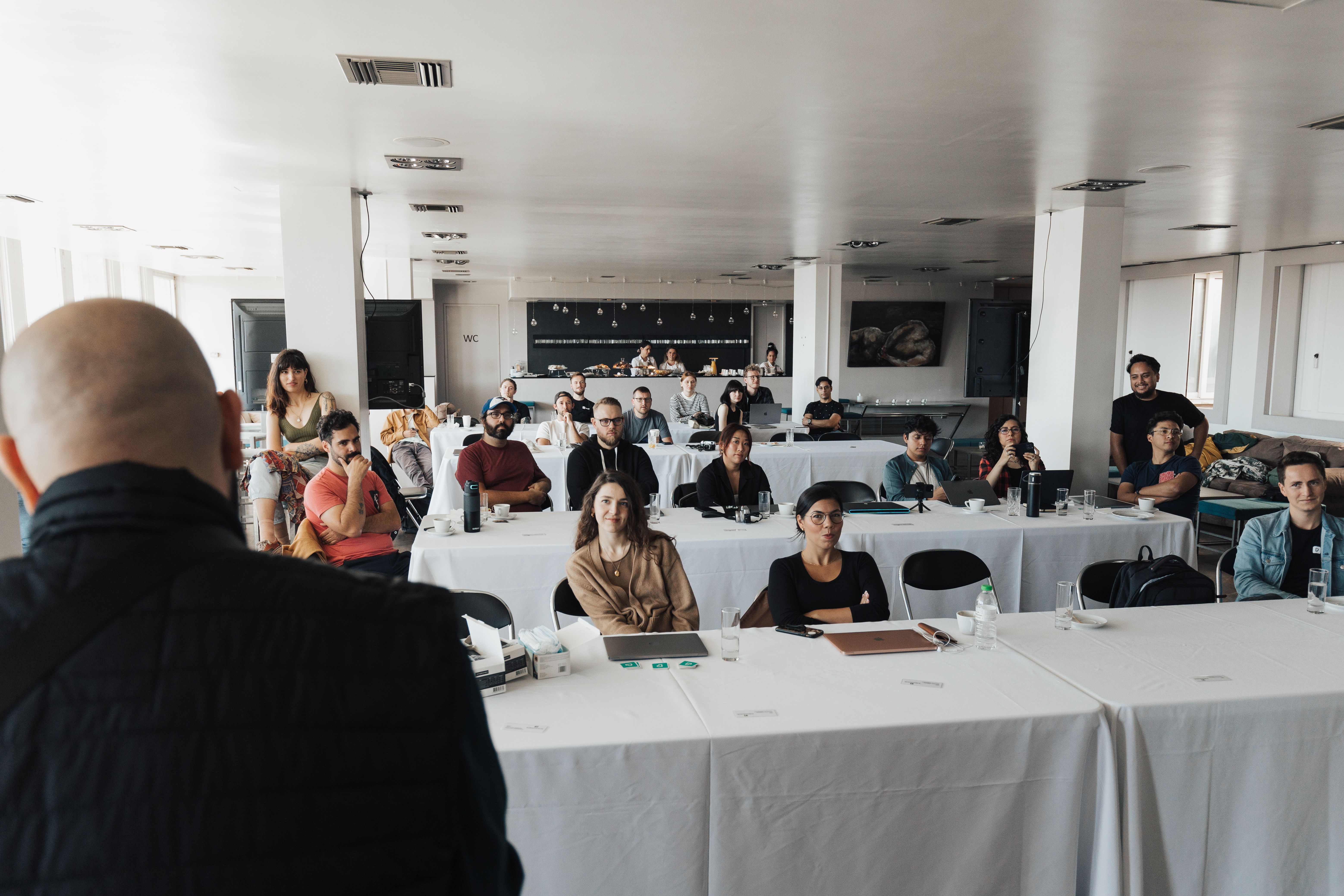
For these workshops, the university brought together fifty adults and fifty young people. The young participants were between 18 and 25 years old. Both the young people and the adults came from different degree programs and areas of the university.
The experience took place over two days, alternating lectures on gender with workshops designed to prompt intergenerational dialogue on the subject. The group of 100 people took part in four workshops and two surveys, in addition to three lectures. The workshops were held in an intensive format, from 9:00 a.m. to 6:00 p.m., with meals included, over two consecutive days. The breaks and time spent together helped foster a climate of trust and encounter. The lectures aimed to offer perspectives and information on the topic that would help participants review, refine, and reformulate their positions. The workshops followed a progression from diagnosis, to opening the groups to dialogue, to dialogue exercises themselves, and finally to an assessment of the dialogue.
Activities, format, and learning outcomes:
- Initial survey. Individual (anonymous). Outcome: making explicit the mistrust felt toward the group holding a different viewpoint.
- Brainstorming and selecting conditions and commitments for dialogue. Groups organized by generation, with a plenary session. Outcome: establishing concrete conditions and commitments for dialogue.
- Guiding questions: concepts and definitions. Mixed groups (generations combined), with a plenary session. Outcome: building conviction that a space existed in which diverse opinions could be freely expressed.
- Guide chart 1: convergences and divergences. Mixed groups. Outcome: identifying convergences and divergences of ideas.
- Guide chart 2: review and more precise conceptualization of convergences and divergences. Mixed groups, with a plenary session. Outcome: reviewing convergences and divergences following the plenary discussion.
- Assessing the dialogue. Mixed groups, with a plenary session. Outcome: gathering lessons learned from the dialogue experience and generating ideas for how to continue the dialogue.
4. Results
4.1. Initial Survey
The first activity consisted of all participants completing an anonymous module. This survey sought to establish how participants viewed themselves and the other generation in relation to gender. The module was answered by 76 people. Below are some of the most representative responses to each question, preserving their original wording.
1. Regarding the question of gender, the other generation does not understand that…
- Our generation is open-minded.
- The dangers of their approach and its medium-term repercussions.
- Older people struggle to accept changes in roles and sexuality.
- My life is different from what they experienced.
- Different genders can exist, and each person is what they decide to be based on their history and experiences.
- The fullness of happiness lies in following the natural law inscribed in our hearts.
- Labels don’t matter.
- My life was shaped by them, but I have the privilege of choosing my own path.
- That we are not looking for crazy things.
- That more than two genders exist, and that it is a matter of personal identity.
- That objective realities exist that do not depend on opinions or eras.
- We hold different opinions that deserve to be heard.
- That only two genders exist.
- That it is an identity that should not be subject to social norms.
- That some people do not identify with what has traditionally been established as a “gender.”
- Recognizing myself as a man or a woman is a very complete way of being happy.
- Yes, we have gone through the same concerns and struggles they did.
- Above all, respect and empathy for each person should prevail.
- The world is constantly changing.
- Many things have changed with respect to gender.
Responses to this first question fall into two directions: some point more toward the question of gender itself and how it is understood —whether there are two or more genders, the role of roles and sexuality, and whether or not a natural law exists. Most responses emphasize a difference in attitude between the two generations — whether they are more or less open to change, tolerance, or labeling.
2. When I express my opinion on a gender-related topic to someone from the other generation…
- They don’t respect genders they consider different.
- They don’t understand me, they close themselves off in their view, and they aren’t open to hearing how things are now.
- Sometimes they understand.
- I generally find them closed off.
- I try to express my ideas respectfully, but when I sense there could be a clash, I prefer not to speak.
- They generally reject it.
- I feel afraid of being labeled and not being heard.
- I feel obligated to respond the way they see things.
- They think I want to lecture them, or that I know nothing.
- I feel a bit afraid of how they will react.
- They’re somewhat closed off, with outdated ideas.
- It’s hard to build a connection.
- They oppose one another.
- I prefer to avoid confrontation.
- That I’m from another world.
- They don’t try to understand what I’m expressing.
- I expect a radical stance, not open to respectful dialogue.
- I fear the emotional harm and the reaction of not thinking like they do.
- I don’t think I’ve ever been open about this with the other generation.
- I feel light-years away from what they experience or envision.
The third question confirms this mutual mistrust. Both generations feel discredited by one another and consider that this bias makes genuine understanding very difficult. It is worth noting the suffering this entails, which can be sensed in some of the responses.
3. I believe adults/young people think that we…
- Don’t understand them.
- Are incapable of telling right from wrong.
- Want to hurt them, when that isn’t true.
- Aren’t on their side.
- Are wrong for doing things differently.
- Aren’t tolerant.
- Want to restrict their freedom, to harm them.
- Know nothing, that we’re ignorant.
- Only want a relaxed, easy life.
- Label people.
- Aren’t open to change.
- Want to forbid them things.
- Don’t have gender-related conflicts.
- Are messed up because of how we think and want to do things.
- Are fragile, a “snowflake” generation.
- Can’t understand them, and that their problems are different from ours.
- Are uptight and prudish, old-fashioned.
- Are cast as rebellious and irresponsible, lost to technology and other things.
- Live in reckless permissiveness.
- Want to oppress them.
Regarding the consequences of this mistrust, both generations were convinced that, were decisions to depend entirely on the other, things would “objectively” go wrong, with both pointing to potential injustice and harm to people.
4. If gender policy depended entirely on the other generation…
- There would be no freedom of expression.
- We would be a divided generation.
- The other generation would be dissatisfied.
- Chaos.
- We would be freer, but the concept of limits would be blurred.
- They would limit our ability to question things.
- There would be more oppression and discrimination.
- Disorder and confusion.
- Complicated.
- Everything would be approved without sufficient reflection, with negative future consequences.
- We would not progress. We must evolve.
- Left-wing lobbies would manipulate them and cause even more harm than now.
- Permissiveness without limits.
- We would be freer.
- Everything would be permitted, without principles or universal values.
- There would be a shortage of freedom of expression and identity.
- We would have thousands of different bathrooms.
- There would be no growth or development.
- They would lack a gender perspective and end up violating the human rights of others.
- Many people would feel frustrated and misunderstood.
Regarding the adjectives used to characterize the other generation, only three responses carried a nuance that could be considered positive: “free, diverse, inclusive” and “sensitive, empathetic,” along with “correct ideas” (though paired with “closed-off”).
5. Three adjectives that characterize the other generation’s attitude toward gender:
- Ignorance, disrespectful, stubbornness.
- Defensive, closed-off, imposing.
- Uncertainty, fear, confusion.
- Free, diverse, inclusive.
- Closed to dialogue. Uninformed. No data.
- Relativism, radicalization, confusion.
- Permissiveness, no limits, whim.
- Ugly, strange, limited.
- Intolerance, lack of empathy, apathy.
- Distant, harmful, worried.
- Free, fluid, without labels.
- Closed-off, though with correct ideas.
- Rebelliousness, intolerance.
- Extreme generalization and polarization. Intolerance. Lack of openness.
- Uncomprehending, obsolete, old-fashioned.
- Sensitive, playing the victim, empathetic.
- Misogynistic, homophobic, and stagnant attitude.
- Radical, confrontational, selfish.
- Closed-mindedness, imposition, no willingness to engage in dialogue.
- Unfamiliarity, impulsiveness, fear.
- Arrogant, haughty, disrespectful.
- Defiant, unstable, and intolerant (for not accepting the truth).
The last two questions highlighted the frustration felt by both adults and young people toward the other generation, revealing the values each generation defends and the suffering associated with feeling that the other side is not open to understanding and dialogue.
6. It hurts me that adults/young people…
- Believe they are always right.
- See my actions in a bad light.
- Label me without listening.
- Don’t listen.
- Assume I don’t know.
- Reject what is valuable to me.
- Don’t consider our ideas valid.
- Think we are the enemy.
- Make us feel judged and afraid, which sometimes keeps us from approaching them and expressing our concerns.
- Don’t think about the future or the importance of family.
- See me as foolish, believe I don’t understand, that we can’t talk.
- Are self-centered.
- Underestimate us for being minors.
- Don’t understand new perspectives on life.
- Discredit my principles. Think we only want to judge and point fingers.
- Don’t realize that their words sometimes convey hateful rhetoric.
- Believe they can control us and make decisions for us.
- I find it sad that adults not only discredit these issues but attack people themselves.
- Don’t want to work together to build something jointly, and only expect us to conform to their mold.
7. I am afraid that adults/young people…
- Won’t accept me.
- Have the wrong answers.
- Will polarize without listening.
- Will lose themselves in an empty, purposeless existence.
- Will become inflamed and seek a major conflict, with retaliation.
- Won’t find truth.
- Will label and slander me.
- Will hurt and limit young people for not sharing the same views.
- Will keep believing our generation is bad and that we do things wrong.
- Will reach old age without ever understanding their children, nieces, nephews, or grandchildren.
- Will be radical or extremist in their positions.
- Will make aggressive comments about young people’s views.
- Won’t follow the advice of their elders.
- Will destroy themselves.
- Will never find trustworthy interlocutors in us.
- Won’t show openness and will be intolerant.
- Will keep making decisions without opening themselves to how things are today.
- Will lose principles such as respect for life.
- Will do terrible things out of a lack of understanding of the good.
- Will keep making decisions based on outdated beliefs, affecting our future.
This synthesis of the initial survey made clear the starting point for the second workshop: mutual mistrust between the two generations, and disbelief regarding the need for, or possibility of, genuine dialogue.
4.2. Brainstorming and Selecting Conditions and Commitments for Dialogue
After this first exercise, teams were formed by generation: five teams of young people and five of adults. Each team was asked to specify four things: what they wanted to ask for, what they were willing to give, what could block the dialogue, and what advantages might result if the dialogue succeeded. In presenting the results, no distinction is made between contributions from young people’s teams and adults’ teams.
We wanted to ask for: emotional responsibility, openness, empathy, respect, non-defensiveness, understanding, patience, charity, welcome, and the freedom to be wrong paired with the empathy to correct/accompany one another.
We wanted to give: genuine respect, openness, the possibility of building together, new perspectives, active listening, a reason to marvel, testimony, flexibility, encounter, experience, patience, knowledge, culture, and hope grounded in experience.
Our blockers: imposing ideas, clashing contexts, lack of patience, letting it turn into a debate (winning/losing), language, intellectual arrogance, prejudice, not listening, ideologies, failing to find common language, rigid mindsets, labeling, ignorance, and differing language.
Advantages: getting to know the other side’s point of view, reaching agreements, defining and giving us identity, new perspectives, turning dialogue into action, empathy, listening, understanding, resilience, creating safe spaces, development of thought, the possibility of understanding the other, a first step toward encounter, and a demonstration of good will.
Openness was the most frequently requested (5 times), followed by empathy (3 times). “New perspectives” was the most frequent offer (4 times), followed by respect and empathy (2 times each). As for blockers, prejudice was cited most often (5 times), followed by lack of listening (4 times) and lack of patience (3 times). The advantages centered on understanding, encounter, and the possibility of building together.
4.3. Guiding Questions: Concepts and Definitions
Once each team’s commitment had been defined, the substantive work began. Ten mixed teams of adults and young people were formed. The guiding questions were: What is gender? Who invented the term “gender”? What does the Church think about gender? What does this word evoke in me? Participants were not asked to reach any consensus; each response was recorded without correction or comment.
The diversity of opinions was striking: some responses precisely identified who and when the term was coined (most referred to John Money in the late 1960s), while others said it had always existed. Regarding the Church’s position on gender, most responses emphasized a negative judgment: that it disagreed, considered it dangerous, an ideology, and so on. Heterogeneity was particularly notable in the feelings evoked by the word gender, ranging from fear to trust, freedom to dictatorship, relief to dread.
To shed light on these responses, a lecture was given on the genesis of the term: how it was introduced into psychology, feminism, and politics, the Church’s initial reaction, and its evolution. It helped clarify that part of the confusion stemmed from a failure to distinguish among the levels at which the dialogue is normally framed — the existential level (the lives of concrete individuals), the anthropological level (what gender actually is), and the political level. Visualizing the origin of this ambiguity across each level helped everyone gain a clearer picture.
4.4. Guide Chart 1: Convergences and Divergences
In the second team exercise, the guiding questions were: What is sex? How are sex and gender related? Is being male and female something natural or cultural? Teams organized their responses into main answers, points of agreement, and points requiring clarification, which required not only a neutral collection of each member’s opinion but a deeper understanding of the different ideas, their convergences and divergences.
The definition of sex presented no particular difficulty, while the other two questions were less clear. Regarding the relationship between sex and gender, some said they were the same thing, others that they were independent realities, and others said they did not know. As for being male or female, some said it was natural, others cultural, and others said both. Following this presentation, various gender theories were introduced, highlighting the strengths and vulnerabilities of each approach to the relationship between sex and gender. It became clear that it was not accurate to speak of “the” theory or “the” ideology of gender, and that instead the heterogeneity of theories needed to be considered, without treating them as a monolithic bloc.
4.5. Guide Chart 2: Review and More Precise Conceptualization of Convergences and Divergences
The next team exercise consisted of returning to the chart completed in the previous session and revising or refining certain points, following the plenary exchange and the theoretical lecture. Nearly every team reformulated some of their ideas and identified points of agreement or points needing clarification with greater precision. In particular, it became clearer to everyone that being male and female was both natural and cultural at the same time. There was also greater convergence overall, showing that positions were shifting or being articulated more clearly.
A final lecture examined the role of the different components at play in identity — body, psyche, culture, freedom — showing which elements each gender theory tends to prioritize, and offering criteria for discerning the relative validity of different positions. As previously noted, the goal was not to provide a definitive answer to the questions surrounding gender, but simply to broaden participants’ perspective. Participants confirmed that the lectures had helped them revisit their own ideas and shift their position on certain points.
4.6. Assessing the Dialogue
At the end of each team dialogue exercise, participants were asked to spend a few minutes assessing how the dialogue itself had gone, guided by the following questions: What helped me during the dialogue? What didn’t help me? What have I learned? Is there anything I am grateful for? Participants were invited to take a moment of personal reflection, followed by a few minutes of optional sharing. This helped keep in view not only the evolution in understanding of the ideas being discussed, but the exercise of dialogue itself — its conditions, obstacles, and demands.
In a final team exercise, participants were asked to express what they had learned from the dialogue.
What have we learned about dialogue these past few days?
- It really is possible!
- That safe spaces are needed in order to trust each other and talk about these topics.
- That it isn’t entirely true that young people always think like other young people, or that adults always think like other adults.
- That we share many ideas and values.
- That it was possible because there was respect and openness.
- A safe, trusting environment was established.
- That it was possible because of how the whole encounter was facilitated.
- That it was possible because we made an effort to overcome polarization.
- That we came in with mistaken ideas about the other generation.
- That it’s possible to have dialogue without arguing, because contentious topics were addressed without a contentious tone.
- That it was possible thanks to respect, active listening, and making ourselves vulnerable.
- It broke down the frameworks or preconceptions we brought with us.
- The importance of building bridges through empathy, connection, respect, and humility.
- Openness to learning.
- That it truly is possible, that fear is a barrier we carry, and that we need to drop our guard and stop fearing judgment.
- That every person, regardless of age, has something valuable to contribute.
- That we need the experience and knowledge of both generations.
- It was possible because everyone had the attitude of learning, assertive listening, and willingness.
- That it is possible, and essential.
- That we don’t understand each other because we’ve lived through different things, but that there is a real desire to understand one another.
- That it’s normal for us to be different.
- That we are complementary, not opposed.
- That it’s essential to establish a pact of goodwill from the outset.
How could we create more spaces like this one?
- By letting go of fear, fostering respect and responsibility.
- Roundtables as safe spaces.
- Dialogue groups to promote spaces like this.
- Building bonds of trust — it must be a proposal from both sides.
- Pauses and dedicated spaces for dialogue are necessary.
- Replicating this event and extending it to the rest of the community.
- Giving the assurance that anything can be discussed at the university, without judgment.
What would we propose to the university?
- Training for all faculty.
- Expanding workshops like these to other topics.
- Holding it off campus.
- Opening spaces for dialogue on these and related topics.
- Offering tools to help heal the wounds we see in educators and adults.
- Changing the methodology in certain classes to foster intergenerational dialogue.
- Incorporating these lessons into classes and work settings.
As a final activity, participants were asked to sum up their experience in a single word and share it in the plenary session. The most frequently repeated words were: joy, encounter, hope, “it can be done,” bridge, conversion, empathy, dialogue, surprise, new path. The joy shared by all was the most characteristic note of this concluding moment.
5. Discussion and Conclusions
The conclusions run along two lines: on one hand, the dialogue experience itself and the methodology used; on the other, the specific question of gender.
Regarding dialogue, several elements of the method are considered to have favored its success, in particular:
- The creation of a safe space, with an explicit commitment that opinions could be expressed freely and respectfully.
- The commitment made by all participants to make this possible, having first identified their fears and potential obstacles.
- The awareness that the goal was not to win a debate, but for everyone to leave enriched: the workshops were designed to be dialogical rather than dialectical.
- The gentle facilitation of plenary sessions, aimed at offering points for reflection rather than closed answers.
- A precise methodology for team exercises, which structured and guided reflection and mutual listening.
- The demonstration that it is possible to carry out a critical, learning-oriented exercise with young people and adults together, and that this exercise leads initial ideas to be nuanced or significantly changed.
Regarding gender, the experience confirmed that the polarization typically surrounding this debate requires a patient distinction of levels, concepts, and nuances. Without these distinctions, it is nearly inevitable to fall into reductive positions that are easily ideologized:
- The importance of distinguishing the levels at which the dialogue is approached. Debate is usually confined to the ethical or political level, without reaching a deeper level — the anthropological — which in turn rests on epistemological and metaphysical levels rarely made explicit. Without clarifying these underlying assumptions, it is very difficult to reach consensus at the ethical or political level.
- The need to distinguish and adequately define concepts. The term gender is not univocal, and this is the source of the greatest difficulty: there are very different ways of understanding it. Both young people and adults approach this topic from more or less simplistic ideas that reduce the complexity of reality.
- The question of gender is an important one, with clear social consequences depending on how it is conceived. The cultural and generational polarization typically surrounding this topic requires a paradigm shift in how it is approached.
The workshops proposed in this article are not a perfect model, but it has been confirmed that intergenerational dialogue on gender was genuinely fostered and positively valued by the participating groups. The workshops led both groups to set aside the fear of hurting one another, mutual mistrust, and the disbelief that dialogue was even possible. Participants ended by expressing surprise and joy that this dialogue had been possible, and they generated ideas for how to continue and reproduce these spaces between professors and university students. One could consider that they moved from the paradigm of the culture war to the paradigm of dialogue.
References
- Engelhardt HT. The Foundations of Bioethics. New York: Oxford University Press; 1996.
- Harteveld E, Berntzen L, Kokkonen A, Kelsall H, Linde J, Dahlberg S. The (Alleged) Consequences of Affective Polarization: Individual-Level Evidence & a Survey Experiment in 9 Countries. 2022.
- Jost J, Baldassarri D, Druckman J. Cognitive-motivational mechanisms of political polarization in social-communicative contexts. Nat Rev Psychol. 2022.
- Nordbrandt M. Affective polarization in the digital age: testing the direction of the relationship between social media and users’ feelings for out-group parties. New Media & Society. 2021.
- Jones-Jang S, Chung M. Can we blame social media for polarization? Counter-evidence against filter bubble claims during the COVID-19 pandemic. New Media & Society. 2022.
- Austriaco NPG. Biomedicine and Beatitude: An Introduction to Catholic Bioethics. 2nd ed. Washington, D.C.: The Catholic University of America Press; 2021.
- Deardorff D. Manual for developing intercultural competencies: story circles. Paris: UNESCO Publishing; 2020.
- Fletcher S. Intergenerational Dialogue to Reduce Prejudice. Journal of Intergenerational Relationships. 2007.
- UNESCO. UNESCO survey on intercultural dialogue, 2017: analysis of findings. Paris: UNESCO Publishing; 2018.
- Rodríguez M. Teoría de género: presupuestos y raíces filosóficas [Gender Theory: Presuppositions and Philosophical Roots]. Rome: G&B Press; 2022.
Originally published in Medicina y Ética, January–March 2024, Vol. 35, No. 1. This work is licensed under a Creative Commons Attribution-NonCommercial-ShareAlike 4.0 International license.